
The Top Las Vegas DJ Residencies of 2026 and Their Global Ripple Effect
While the UK’s club scene pulses to its own storied beat, the gravitational pull of Las Vegas’s mega-residencies is now unmistakably shaping nights from Manchester’s basements to Mayfair’s exclusive members’ clubs. What was once a distant desert spectacle has become a powerful blueprint, influencing everything from stage production to DJ career goals. This isn’t just about imported glamour; it’s a complex cultural exchange where Vegas’s high-stakes, high-budget model meets the UK’s raw, genre-defining energy. As we look at the defining Las Vegas DJ residencies of 2026, we trace their profound ripple effect across the Atlantic, examining how they’re redefining what a night out means in the era of the super-club.
The 2026 Las Vegas Residency Power Players
The Las Vegas residency circuit in 2026 remains a tightly controlled empire, dominated by powerhouse hospitality groups with global ambitions. Zouk Group at Resorts World and the Hakkasan Group’s Omnia at Caesars Palace continue to set the agenda, booking a blend of evergreen superstar DJs and chart-topping crossover acts. The line between electronic music and mainstream hip-hop has never been thinner on the Strip, reflecting a calculated drive to capture every segment of the premium party demographic. The residency is no longer just a gig; it’s a branded entertainment franchise.
The Main Room Titans: EDM & House
In the cavernous, multi-level main rooms, the sound is one of precision-engineered euphoria. Veterans like Tiësto and deadmau5 maintain their stronghold, delivering sets built on recognizable anthems and flawless, stadium-sized builds. They are joined by a newer wave of house-oriented hitmakers like John Summit and Dom Dolla, whose grooves offer a slightly grittier but equally crowd-pleasing alternative. The common thread is a relentless, peak-time energy designed to keep the dancefloor packed and the champagne flowing, a formula perfected for the Vegas visitor on a weekend timeline.
The Hip-Hop & R&B Controllers
Parallel to the electronic surge, hip-hop and R&B residencies have cemented their status as major economic drivers. Superstar producers-turntablists like Kaytranada bring a distinct musicality, while megastars like Drake (through his ongoing history with XS) leverage their pull for sporadic, event-style appearances. These nights pivot on curation and vibe as much as mixing prowess, often featuring a parade of special guests. The dominance of these acts underscores a key Vegas truth: the soundtrack to a luxury bottle-service experience is as likely to feature 808s as it is a four-on-the-floor kick drum.
How Vegas Production Values Are Going Global
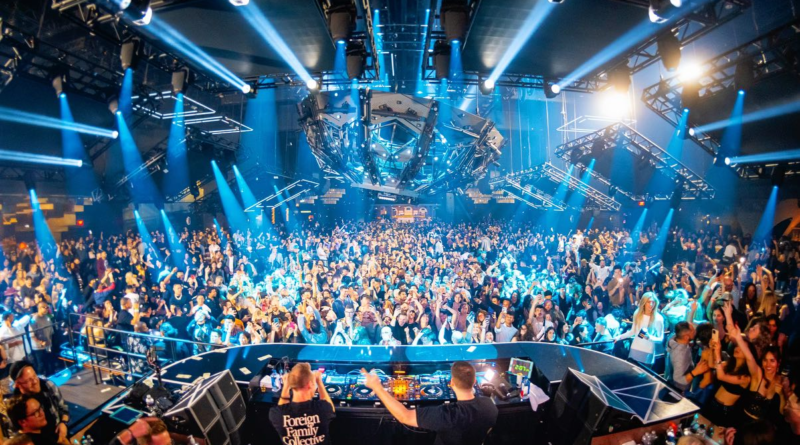
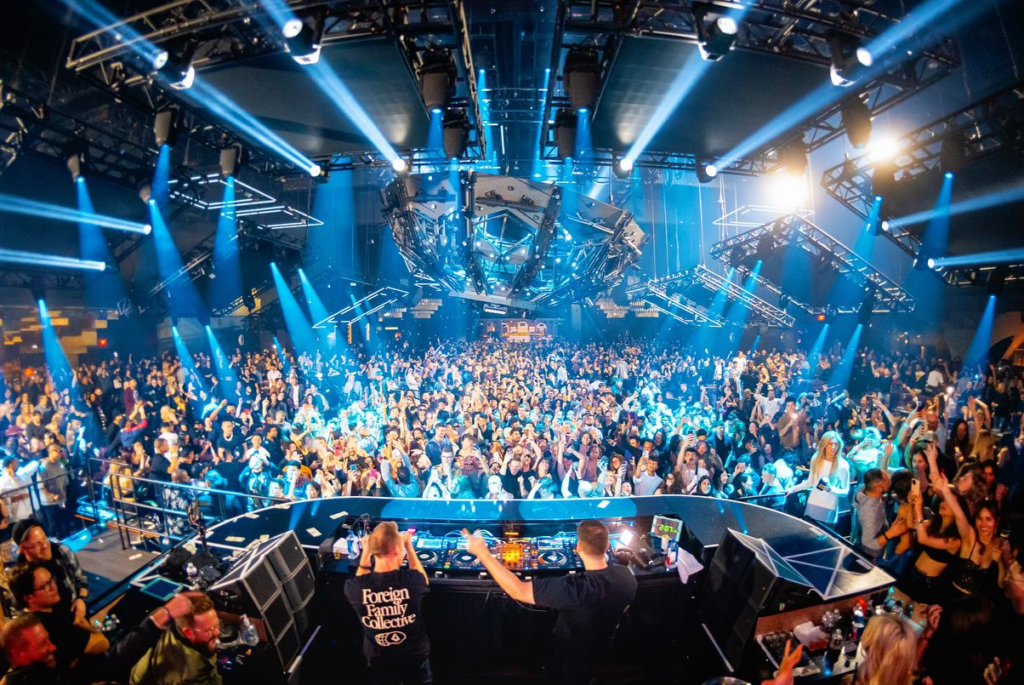
The extreme, no-expense-spared production standard of the Vegas super-club has become a new global benchmark. UK flagship venues, in direct competition, now feel the pressure to deliver a similar level of sensory overload. What was once a Vegas exclusive—kinetic lighting rigs that move in symphonic unison, CO2 cannons timed to the millisecond, and aerial performers descending from the ceiling—is now an expected part of the premium package at venues like London’s Ministry of Sound and Manchester’s The Warehouse Project.
The ‘Instagrammable’ Spectacle
Modern club production is designed for virality. The breathtaking, shareable moment—a cascade of confetti, a perfectly synchronized laser tunnel, a surprise pyrotechnic blast—is central to the Vegas model. This philosophy has migrated directly to the UK, where club marketing now heavily relies on user-generated content from inside the venue. The night itself becomes a content factory, with the DJ not just playing tracks but triggering visual spectacles that demand to be recorded and shared.
Sound System Arms Race
Beyond the visuals, the auditory arms race has also intensified. Vegas clubs install bespoke, multi-million-pound sound systems that offer crystal-clear audio even at ear-splitting volumes. This has raised the bar for UK venues, pushing them to upgrade from industry-standard rigs to custom-engineered solutions. The goal is no longer just loud sound, but immersive, textured, and physically felt audio that replicates the overwhelming sonic bath of a Vegas main room, ensuring the bodily experience matches the visual spectacle.
The Economic Model: Bottle Service & Branded Experiences
The most significant export from Vegas may be its economic engine. The high-roller, table-service model has fundamentally altered the revenue structure of high-end UK clubbing. Venues like London’s Cirque Le Soir and Libertine were early adopters, transforming the dancefloor perimeter into a landscape of exclusive booths and tables with dedicated service. This model prioritises the VIP spend, shifting the club’s focus from ticket-holding dancers to hospitality guests.
From Dancefloor to VIP Table
The culture of the dancefloor as the egalitarian heart of the club is challenged by this layout. Now, the most coveted status is a reserved table with a bottle of premium spirits, often at a minimum spend reaching thousands of pounds. This creates a two-tiered experience: the energetic, packed general admission area and the curated, seated VIP zones. For the club operator, the financial logic is irresistible, guaranteeing substantial revenue before a single ticket is sold.
Sponsorship & DJ-Brand Collabs
This luxury ecosystem is fuelled by deep brand partnerships. Residencies are frequently sponsored by ultra-premium spirit brands or fashion houses, with the DJ becoming the face of the collaboration. These deals extend beyond a logo on a flyer to include limited-edition bottle releases, branded merchandise, and exclusive after-parties. The DJ themselves becomes a key component of a larger lifestyle marketing campaign, a trend now commonplace in UK mega-club events.
Impact on UK DJ Culture & Artist Development
For UK DJs, a Las Vegas residency has evolved into a recognized career pinnacle, a symbol of global marketability and commercial success. It represents a move from artist to entertainer, commanding fees that dwarf typical club bookings. This aspiration inevitably influences artistic development, as the ‘Vegas sound’—polished, instantly engaging, and risk-averse—filters back into sets played on European soil.
The UK DJ’s Vegas Dream
Securing a Vegas residency is seen as the ultimate validation for DJs who have risen through the UK ranks. It signals an ability to command an international, non-genre-specific crowd and operate within a highly corporate entertainment structure. The dream is no longer just to headline Glastonbury; it’s to have your name in neon on the Strip, a fact that subtly shapes the career trajectories and musical choices of rising talent.
Genre Blending & Setlist Formulas
The need to please a diverse, transient audience in Vegas encourages a homogenised, peak-time approach. This has led to a specific style of genre-blending in mainstage sets globally. A typical progression might move from commercial house to a hip-hop edit, into a tech-house drop, and onto a classic vocal anthem. This crowd-pleasing formula, designed for maximum immediate impact, is now prevalent at UK festivals like Creamfields and in Ibiza’s biggest clubs, prioritising constant energy over nuanced journey-building.
Criticism & Counter-Culture: The Underground Pushback
This Vegas-inspired shift has not gone unchallenged. Purists within UK dance music argue that the corporate residency model homogenises sound, stifles artistic risk, and commodifies the club experience. They see the focus on spectacle and VIP culture as antithetical to the foundational principles of underground dance music: community, musical discovery, and escapism through rhythm.
The Authenticity Debate
The core of the criticism is an authenticity debate. Detractors claim the Vegas model produces functional, soulless entertainment rather than culturally vital music scenes. This pushback champions the DJ as a selector and curator, not a button-pusher for pyrotechnics. It values sound system culture and musical depth over Instagram moments and bottle displays, arguing that the soul of UK club culture lies in its grassroots, not its gloss.
The UK Underground’s Response
In direct response, the UK’s underground scenes have experienced a vibrant resurgence, doubling down on their unique identities. Cities with rich musical heritage have become bastions of this counter-movement. For instance:
- Bristol’s dubstep scene and its broader bass music culture continues to thrive in intimate, dedicated spaces, prioritising weighty sub-bass and experimental beats over commercial formulas.
- In Leeds, the legacy of back-to-basics house and techno finds a home in gritty, audio-focused warehouses, where the DJ booth, not the VIP section, is the sacred centre.
- Across London, a network of unlicensed, pop-up parties and member’s clubs deliberately avoids the trappings of the super-club, fostering niche communities and experimental lineups.
These scenes offer a vital alternative, proving that for a significant portion of the UK clubber, authenticity and atmosphere cannot be bought or manufactured.
This complex dance between Vegas spectacle and UK substance reveals a dynamic, two-way cultural exchange. While Las Vegas indisputably sets a powerful commercial and production template that reshapes expectations worldwide, the UK’s unique grassroots energy, history of innovation, and fierce protection of its underground ensure it is never a mere imitator. The future of clubbing lies not in one model dominating, but in the ongoing tension and dialogue between the monumental showmanship of the Strip and the raw, generative heart of the British underground.